In recent years, the rules of “Transition 4.0” have changed several times, going from super-amortization to tax credit and now, from 2026, to a new hyper-amortization for 4.0 assets. For those considering a laser marker, the question is simple: does it still make sense to talk about 4.0 and what does it mean in concrete terms of economic return.
What “asset 4.0” means today
To be recognized as an asset 4.0, a machine must meet precise technical requirements: control via CNC/PLC/PC, interconnection to company information systems, automatic integration with logistics and production, advanced HMI interface, and cybersecurity. In practice, it is not enough for the machine to be “new” or digital: it must communicate automatically with management, MES and other machines in the factory.

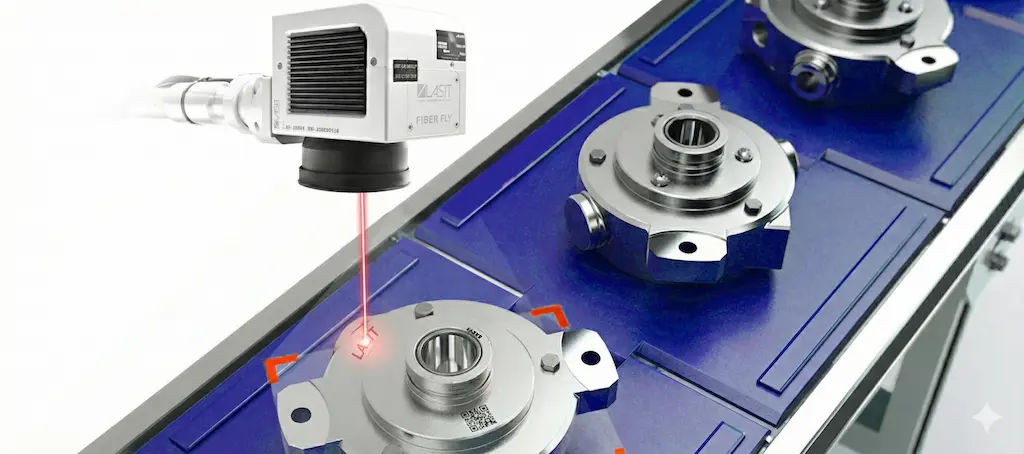
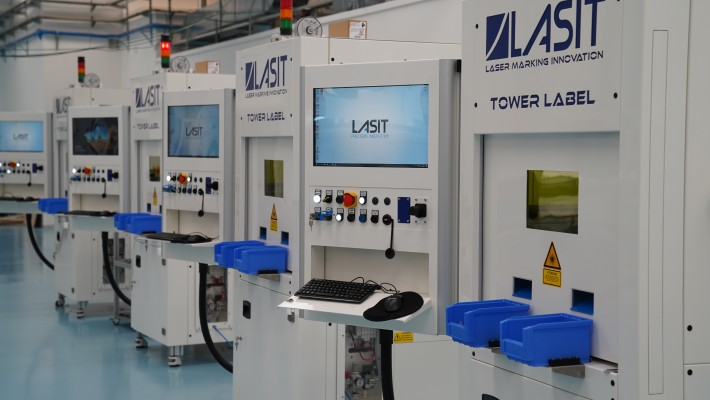
Laser marking systems fall squarely into this category because they are intelligent, connected machines designed to be an active node in the factory, not just a stand-alone station.
Why laser marker 4.0 is “ready” for the interconnected factory
Laser markers are now the technology of choice for traceability 4.0 of components and products throughout the supply chain. This translates into three key elements:
- Native Integration Software
Marking software interfaces with enterprise ERPs and MESs and exchanges work orders, part numbers, batches and marking parameters via standard protocols (OPC-UA, TCP/IP, SQL databases, structured files, etc.). - Bi-directional interconnection
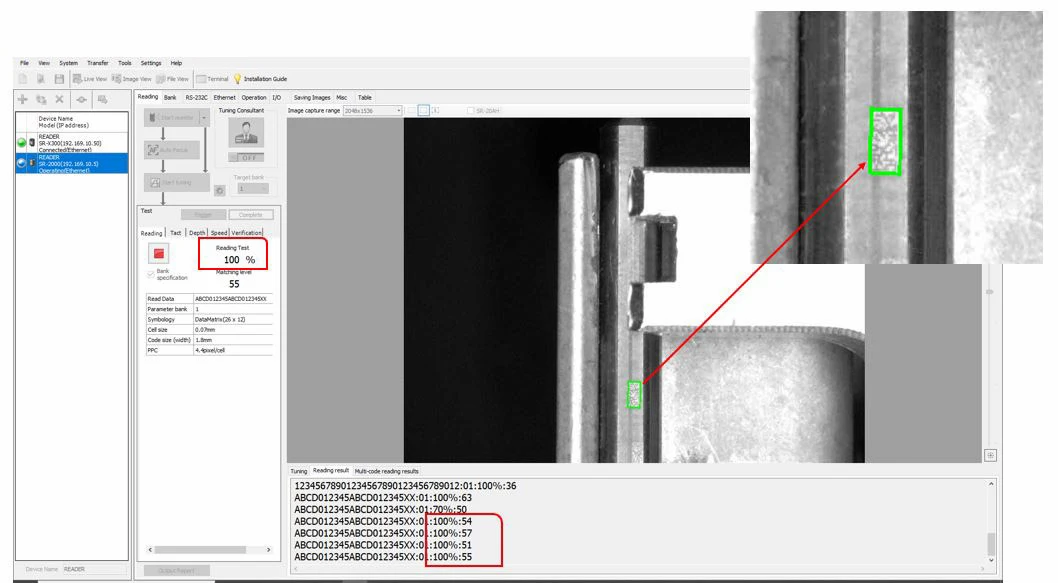
The marker automatically receives instructions from the business system, loads the correct layout, populates the dynamic fields, and, at the end of the cycle, returns the outcome of the marking, cycle times, any errors, and traceability data to the same system. - Data for quality and maintenance
All operations are recorded in structured databases or files, making possible OEE analysis, waste control, tracking for audits, and predictive maintenance scenarios.
In other words, the laser marker is not just a “marking machine,” but an intelligent sensor that feeds the factory with data useful for operational and strategic decisions.

From tax credit to new hyper-depreciation 2026
In the previous phase of Transition 4.0, the main benefit was the tax credit: a percentage of the cost of the asset, which can be used to offset over several years. With Budget Law 2026, hyper-depreciation returns, replacing the credit and putting the increased deductible cost of 4.0 assets back at the center.
The principle is linear:
- the asset is recorded in the balance sheet at its normal cost;
- for tax purposes, however, the deductible cost is increased (e.g. +180% for 4.0 tangible assets in the first bracket), with higher percentages for investments that also meet “green” criteria.
Result: for the same investment, the enterprise can deduct a much larger share and significantly reduce IRES/IRPEF over the useful life of the asset.

Basic accounting example (not green)
Let’s imagine a company that purchases a 4.0 laser marker for €100,000. The investment falls into the first bracket of the 2026 hyper-depreciation, with a 180% bonus.
- Statutory cost: €100,000 (amortized, for example, over 5 years on the balance sheet: €20,000/year).
- Tax cost for IRES purposes: €100,000 + €180,000 = €280,000 deductible over time.
If we assume a tax life of 5 years, the annual deductible portion becomes:
- statutory depreciation rate: €20,000/year;
- Extra share of hyper-depreciation: €180,000 / 5 years = €36,000/year.
Total annual deduction: 56,000 €. With IRES at 24% the annual tax savings is:
- 56,000 € × 24% = 13,440 €/year.
On the 5-year cycle, the total savings is about €67,200, which is more than 60% of the initial cost of the marker, adding up effect of ordinary depreciation and markup.
To represent it graphically you can use:
- A statutory depreciation curve (straight line, 20,000 €/year);
- A curve of the tax deduction (56,000 €/year);
- A cumulative “tax cash back” curve, showing in how many years the tax savings cover the cost of the laser.
Variant with green/5.0 project
If the same €100,000 investment is part of a project that allows the application of “green” rates (investments that reduce energy consumption above certain thresholds), the markup on the first bracket can be as high as +220%, for example.
In this case:
- Extra deductible cost: €100,000 × 220% = €220,000;
- Total tax-deductible cost: €320,000.
With a fiscal life of 5 years:
- statutory depreciation rate: €20,000/year;
- Extra share of green hyper depreciation: 220,000 € / 5 = 44,000 €/year;
Total annual deduction: €64,000.
With IRES at 24 percent:
- Annual tax savings: €64,000 × 24% = €15,360;
- Total savings on the depreciation cycle: more than €76,000.
Again, it is straightforward to construct two side-by-side graphs (“4.0 only” vs. “4.0 + green”) to show the difference between the two investment recovery curves
Conclusion
In summary, a 4.0 laser marker today is not just a technical choice: it enables traceability, data collection and integration with other plants, and with the new hyper-depreciation it allows a significant portion of the invested capital to be recovered in a few years.
To move from theory to numbers in your specific case (amount, number of lines, any green interventions), simply set up a simulation: you can estimate the expected tax savings and compare it with the operational benefits on scrap, cycle time and process control, so you can define a truly sustainable 4.0 investment plan.